
News
Philadelphia Eagles Rookie Trade Attempt: A Full Breakdown


The Philadelphia Eagles rookie trade attempt has caught the attention of fans and experts in the NFL world. This move points to the team’s ongoing efforts to adjust their lineup for better results. In recent months, talks have centered on young cornerback Kelee Ringo, a player with high potential but limited game time so far. The Eagles’ front office, known for smart deals, sees this as a way to strengthen other areas while giving Ringo a fresh start elsewhere. This article breaks down the details, from the player’s background to what it could mean for the team moving forward. It offers a clear look at how such trades work in the league today.
Many people follow NFL trades closely because they can change a team’s season. The Eagles have a history of making bold choices to stay competitive. This rookie trade attempt fits that pattern, showing how the team values quick fixes over long waits for player growth. Fans often debate these moves, wondering if they help or hurt in the long run. By looking at this case, readers can understand the thinking behind it and how it ties into broader team plans. The focus here is on facts and insights to give a complete picture without leaving out key parts.
Background on the Player Involved
Kelee Ringo joined the Eagles as a fourth-round pick in the 2023 NFL Draft. He came from the University of Georgia, where he helped win back-to-back national titles. His standout traits include top speed, reaching over 20 miles per hour in games, and strong physical play at the line. However, he has faced challenges adapting to pro-level schemes. In his first two years, Ringo played in 32 games but started only four, mostly on special teams or in backup roles. This limited action has sparked questions about his place on the roster.
Ringo’s scouting reports praise his raw skills but note areas for improvement, like better footwork and reading plays faster. At 6 feet 2 inches and 207 pounds, he has the build to match big receivers. Yet, in a secondary packed with stars like Darius Slay and James Bradberry, he has not gotten many chances to shine. The Eagles drafted him hoping he would grow into a starter, but progress has been slower than expected. This background explains why the team might consider moving him now, before his value drops further. It also highlights how draft picks sometimes need the right fit to succeed.
Will You Check This Article: Celtic vs Kairat Prediction: Detailed Match Analysis and Betting Tips
Reasons Behind the Eagles Rookie Trade Attempt
The main reason for this trade attempt is to balance the roster better. The Eagles have depth in the secondary but need help at positions like linebacker and offensive line. Trading Ringo could bring in a player who fills those gaps right away, such as a rotational linebacker with experience. The team also aims to gain future draft picks, like one in 2025, to keep building through the draft. This approach matches their win-now mindset, where they prioritize current success over waiting for young players to develop fully.
Another factor is player fit within the defensive system. Under coordinator Vic Fangio, the scheme requires strong discipline and quick decisions. Ringo has shown promise in man coverage but struggles in zone setups, leading to assignment errors in practice. The coaching staff believes he might thrive elsewhere with more snaps. By trading him, the Eagles avoid potential locker room issues from a frustrated backup. This move also frees up cap space slightly, as Ringo is still on his rookie deal worth about $4.5 million over four years. Overall, it reflects a strategy to maximize every spot on the 53-man roster.
Team culture plays a role too. The Eagles stress performance above all, even for recent draftees. If a player like Ringo does not meet expectations quickly, the front office, led by Howie Roseman, is willing to act. This prevents stagnation and keeps veterans motivated. Past successes, like trading for stars who boosted the team, support this tactic. However, it carries risks, such as losing a talent who blooms later. The attempt shows careful planning, weighing short-term needs against long-term potential in a league where windows to win close fast.
Teams Involved in the Talks
Reports point to the Denver Broncos as one team in early discussions. They have a young secondary that could use Ringo’s speed to cover fast receivers in the AFC West. The Broncos might offer a linebacker or a mid-round pick in return, addressing the Eagles’ needs. Their defense ranked high last season but lacks depth at corner after injuries. This match makes sense, as both teams look to swap assets without major overhauls.
The Indianapolis Colts have also been mentioned in talks. They need cornerback help due to roster changes and could see Ringo as a low-cost addition with upside. In exchange, they might send a player who fits the Eagles’ linebacker spot, hit hard by free agency losses. The Colts’ focus on building through youth aligns with giving Ringo more playing time. These conversations stay exploratory, testing the market without firm offers yet. Other AFC and NFC teams with secondary issues could join if talks heat up, broadening the options for Philadelphia.
Current Status of the Trade Attempt
As of now, the trade remains in the rumor phase with no deal done. Sources say the Eagles have held active talks but nothing has advanced to final stages. This could change with preseason games or injuries shifting needs. The team views it as more than just checking interest—it’s a real effort to improve. If no trade happens, Ringo stays, possibly motivated to prove himself. Fans track updates closely, with social media buzzing about possible outcomes.
Negotiations often stall over value, like what pick or player comes back. The Eagles want fair return for Ringo’s potential, while other teams haggle down due to his limited stats. Physicals and contract details add layers if a swap occurs. Right now, it’s wait-and-see, typical for offseason moves. The front office keeps options open, ready to pull the trigger if the right offer lands. This uncertainty keeps the story alive, drawing attention to how trades build in the NFL.
Potential Outcomes and Impacts on the Team
If the trade goes through, the Eagles could gain a linebacker ready to contribute now, boosting their defense against run-heavy offenses. A 2025 draft pick would add flexibility for future drafts, helping sustain success. For Ringo, a new team means more snaps, aiding his growth away from a crowded group. This outcome reinforces the Eagles’ image as a proactive franchise, willing to make tough calls for the greater good. It might also inspire current players to perform, knowing spots are not guaranteed.
On the flip side, if talks fail, Ringo remains, which could lead to tension if he feels undervalued. The team might invest more in his coaching to unlock potential, turning him into a key piece. However, holding onto him without progress risks wasting a roster spot. Broader impacts include fan reactions—some support the move for efficiency, others worry it shows impatience with youth. In the NFC East, a stronger lineup could help against rivals like the Cowboys. Overall, the attempt highlights how small deals can ripple through a season.
Locker room dynamics matter here too. Veterans might see it as a sign that everyone must earn their keep, fostering competition. For the franchise, success in such trades builds trust in Roseman’s vision. Failure could draw criticism for giving up too soon on picks. Looking ahead, this could set a pattern for handling young talents, influencing how agents view the team. The impacts extend to scouting, pushing for better evaluations to avoid similar situations down the line.
Another Recent Eagles Rookie Trade Attempt: The Draft Day Move
Beyond Ringo, the Eagles made headlines in the 2025 draft with an attempt to trade up for rookie linebacker Jihaad Campbell from Alabama. They targeted pick No. 18 to grab him early, seeing his skills in coverage and run defense as a perfect fit. When costs rose too high, they settled for a smaller trade to select him at No. 31. This shows their commitment to key targets without overpaying, preserving assets for later rounds.
Campbell’s addition addressed a weak spot at linebacker, where the team needed speed to match modern plays. His college stats, including over 100 tackles in his final year, made him a top prospect. The attempt succeeded in landing him, avoiding the risk of him going to another team. This case differs from Ringo’s as it was about acquiring, not moving, a rookie. It underscores the Eagles’ draft aggression, often trading picks to get who they want. Fans praised the patience, as it kept future options open while filling a need.
Related: Tennessee Titans vs Jacksonville Jaguars Match Player Stats: A Detailed Breakdown
Historical Context of Eagles Rookie Trades
The Eagles have a track record of trading rookies or young players to reshape the team. In 2016, they moved up for quarterback Carson Wentz, sending picks to the Browns. Though Wentz helped win a Super Bowl, injuries led to his later trade. This shows how bold moves can pay off big but come with twists. Another example is the 2022 deal for wide receiver A.J. Brown, where they gave up a first-round pick. Brown became a star, proving the value in swapping assets for proven talent.
Earlier, in 2020, drafting Jalen Reagor just before Justin Jefferson went to the Vikings highlighted evaluation risks, though not a trade. These moments teach that timing and fit are crucial. Roseman’s style favors action over waiting, leading to more wins than most teams. Comparing to league-wide trends, like the Rams’ Stafford trade, the Eagles stand out for frequent involvement. This history provides context for current attempts, showing they are part of a proven formula.
Lessons for Fans and the NFL from This Attempt
Fans can learn that trades like this are business decisions, not personal. They aim to build the best team possible, even if it means moving favorites. For the NFL, it reminds teams to scout deeply and adapt quickly. Successful franchises like the Eagles stay ahead by not fearing change. This attempt also stresses mental toughness for players, as rumors can affect focus. Agents might advise clients on teams with stable rosters to avoid such uncertainty.
Another lesson is the importance of draft capital. Trading rookies can reclaim picks lost in prior deals, keeping the pipeline full. For young players, it shows the need to impress early. The league as a whole benefits from active trading, as it creates excitement and parity. Fans should follow front office patterns to predict moves. In the end, these attempts reveal how the game evolves beyond the field.
Conclusion
The Philadelphia Eagles rookie trade attempt, whether for Ringo or in drafts like Campbell’s, shows a team always pushing for an edge. It combines strategy, evaluation, and timing to stay in contention. While outcomes vary, the process builds stronger rosters over time. Fans gain from understanding these moves, seeing them as steps toward success. As the offseason continues, watch for updates that could shape the next season. This full view leaves readers informed and ready for what’s next in Eagles football.

Introduction to the Washington Commanders vs Chargers Match
The Washington Commanders faced the Los Angeles Chargers on October 5, 2025, in a Week 5 NFL game at SoFi Stadium in Inglewood, California. The Commanders won 27-10 after trailing early. This match showed the Commanders’ ability to come back strong, scoring 27 points without reply after the first quarter. Fans saw standout plays from players like Jacory Croskey-Merritt and Jayden Daniels. This blog post covers Washington Commanders vs Chargers match player stats in detail, including team numbers, individual efforts, and key moments. It aims to give readers a full picture of what happened on the field. The game drew 71,021 attendees under sunny 74°F weather, broadcast on FOX. Both teams entered with 3-2 records, making it a close contest on paper. The Commanders played as +3 underdogs with a 48.5 point total, but they beat expectations with a solid second-half push.
Game Overview and Quarter-by-Quarter Recap
The game started with the Chargers in control. In the first quarter, they scored 10 points while holding the Commanders to zero. Justin Herbert connected with Ladd McConkey for a 2-yard touchdown pass, followed by Cameron Dicker’s 55-yard field goal. This early lead came from strong drives, including a 9-play, 76-yard march for the touchdown. The Commanders struggled to move the ball at first, facing pressure from the Chargers’ defense. By the end of the quarter, the score stood at 0-10, putting the Commanders in a hole they would need to climb out of quickly. As the second quarter began, the Commanders found their rhythm. Jacory Croskey-Merritt scored a 15-yard rushing touchdown to cut the lead, and Matt Gay added a 29-yard field goal just before halftime. This tied the game at 10-10. The Chargers failed to add points in this period, marking the start of their scoring drought.
In the third quarter, the Commanders took over. Croskey-Merritt added another touchdown with a 5-yard run, pushing the score to 17-10. Gay followed with a 36-yard field goal, extending the lead to 20-10. The Chargers’ offense stalled, with no points scored. Key plays included long gains that set up scoring chances for Washington. Their defense also stepped up, limiting Herbert’s options and forcing shorter possessions. The fourth quarter sealed the win for the Commanders. Jayden Daniels threw an 8-yard touchdown pass to Deebo Samuel Sr., making it 27-10. An interception by Mike Sainristil off Herbert helped stop any Chargers comeback. The Commanders controlled the clock and avoided mistakes, ending with 27 unanswered points after the early deficit.
Team Statistics Comparison
Overall team stats highlight why the Commanders won. They gained 389 total yards compared to the Chargers’ 336. This edge came from a balanced attack, with 226 passing yards and 163 rushing yards for Washington, against 181 passing and 155 rushing for Los Angeles. First downs favored the Commanders at 22 to 18, showing better drive sustainability. Turnovers played a big role too, with the Commanders committing just one while forcing two from the Chargers. Time of possession went to the Chargers at 34:19 versus 25:41, but Washington made their time count more with efficient scoring. Penalties hurt the Chargers more, with 10 flags for 85 yards against the Commanders’ 7 for 48 yards. On third downs, the Chargers converted 5 of 7 in the game but ranked fifth in the NFL seasonally at 44.4%. The Commanders were 2 of 7, reflecting their 32.6% season rate, which is 27th league-wide. These numbers show how Washington’s fewer mistakes and better yardage led to victory despite less ball control.
Defensively, the Commanders recorded five sacks while allowing only one. This pressure disrupted Herbert’s rhythm, leading to the interception. The Chargers’ red zone turnover was their first since September 21, costing them points. Opening drive efficiency saw the Chargers score a touchdown, aligning with their 75% rate (second in NFL), but the Commanders failed theirs, matching their 25% mark (27th). Rushing plays of 20+ yards: Commanders had six seasonally (first in NFL), Chargers four (eighth). Scoring broke down as Commanders with 10 in the second, 10 in the third, and 7 in the fourth, while Chargers managed all 10 in the first.
Will You Check This Article: Carolina Panthers vs Tampa Bay Buccaneers Match Player Stats: A Detailed Breakdown of the Week 18 Showdown
Player Statistics: Passing Performance
Jayden Daniels led the Commanders’ passing game, completing 15 of 26 attempts for 231 yards, one touchdown, and no interceptions. His key throw was the 8-yard touchdown to Deebo Samuel Sr. in the fourth quarter, which iced the game. Daniels also added 39 rushing yards, showing his dual-threat ability. This performance marked his fourth passing touchdown of the season. His return from injury was crucial, as he managed the game well under pressure, avoiding sacks and turnovers. On the Chargers’ side, Justin Herbert went 22 of 29 for 166 yards, one touchdown, and one interception. His touchdown came early, a 2-yard pass to Ladd McConkey. Herbert completed 10 straight passes at one point in the third quarter and had a 41-yard run, his second 20+ yard rush this year. With eight seasonal passing touchdowns, he showed skill, but the interception by Sainristil hurt. He also rushed for 60 yards, leading his team in that category.
Player Statistics: Rushing Efforts
Jacory Croskey-Merritt starred in rushing for the Commanders, carrying 14 times for 111 yards and two touchdowns. His scores were a 15-yard run in the second and a 5-yard in the third. This was his first 100-yard game of his career and season, bringing his total touchdowns to four (three rushing). His efforts powered the comeback, breaking tackles and gaining key yards. Jayden Daniels supported with 39 yards, adding mobility to the attack. For the Chargers, Omarion Hampton had 12 carries for 44 yards, but injuries limited options. Justin Herbert led with 60 yards, including a 41-yard scamper. The team’s 155 total rushing yards were solid but not enough against Washington’s defense. Hampton’s ankle injury in the game added to their woes, as the run game couldn’t sustain drives after the first quarter.
Player Statistics: Receiving Highlights
Deebo Samuel Sr. paced the Commanders’ receivers with eight catches for 96 yards and one touchdown. His 8-yard score from Daniels in the fourth was pivotal. Samuel now has four touchdowns this season (three receiving). Luke McCaffrey added a 50-yard catch, his second 30+ yard reception this year. Jacory Croskey-Merritt also contributed as a receiver, though specific yards aren’t detailed. Keenan Allen led the Chargers with five receptions for 58 yards. Ladd McConkey caught the 2-yard touchdown from Herbert, his first of the season. The receiving group struggled after the early score, with the interception limiting chances. Overall, the Chargers’ 181 passing yards reflected limited big plays.
Player Statistics: Defensive Contributions
The Commanders’ defense shone, with Dorance Armstrong recording two sacks among the team’s five. Mike Sainristil had the key interception off Herbert, his second of the season. This unit forced two turnovers while only giving up one, shifting momentum. They held the Chargers scoreless after the first quarter, a big factor in the win. Chargers’ defense managed one sack but couldn’t stop the rush. No standout individual stats beyond the team sack, but they started strong by forcing no points on the Commanders’ opening drive.
Kicking and Special Teams Stats
Matt Gay was perfect for the Commanders, hitting field goals from 29 and 36 yards, plus three extra points. His kicks added 10 points, crucial in building the lead. Cameron Dicker for the Chargers made a 55-yard field goal and one extra point, accounting for seven of their 10 points. No punting or return stats stand out, but special teams played clean without major errors.
Impact of Injuries on the Game
Injuries hit both teams hard. The Commanders placed many on IR before the game, including Tyler Biadasz (ankle, knee), Sam Cosmi (concussion), and Zach Ertz (torn ACL). During the match, no new major issues arose, allowing key players like Daniels to perform. The Chargers suffered too, with Omarion Hampton (left ankle) and others like Joe Alt (ankle surgery) out. This thinned their lines, contributing to the defensive collapse and offensive struggles. These absences forced adjustments, like relying on backups, which affected depth and stamina.
Key Moments That Shaped the Outcome
Several plays turned the tide. The Chargers’ early touchdown and field goal set a 10-0 lead, but Croskey-Merritt’s first score sparked the rally. His second touchdown gave Washington the edge. Sainristil’s interception in the fourth prevented a Chargers response. Daniels’ touchdown pass to Samuel locked it in. These moments, plus the 27 unanswered points, defined the Commanders’ resilience.
Conclusion and Takeaways from Washington Commanders vs Chargers Match Player Stats
This match showed the Commanders’ comeback power through strong rushing and defense. Player stats like Croskey-Merritt’s 111 yards and two scores stand out, alongside Daniels’ efficient passing. The Chargers started hot but faded due to turnovers and injuries. For fans searching Washington Commanders vs Chargers match player stats, this game offers lessons in momentum shifts and preparation. Both teams sit at 3-2 post-game, with the Commanders gaining confidence. Future matchups could be tighter if injuries heal.
News
Carolina Panthers vs Tampa Bay Buccaneers Match Player Stats: A Detailed Breakdown of the Week 18 Showdown
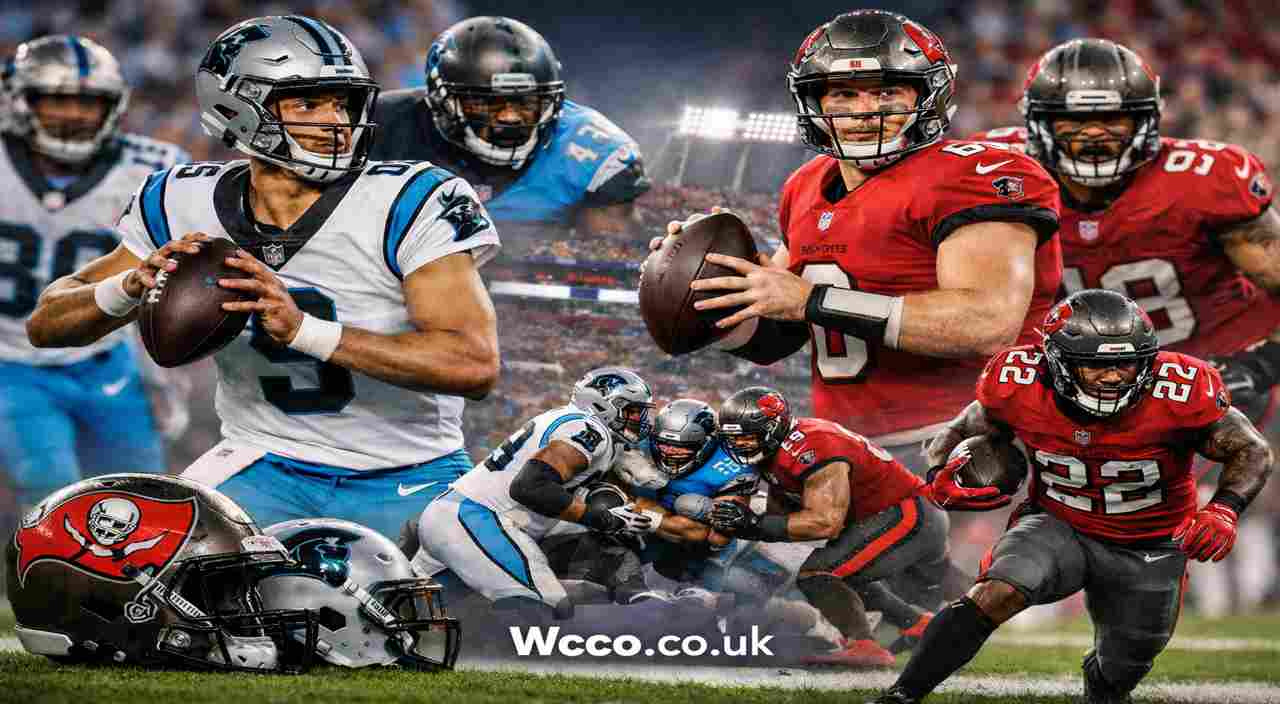
Introduction to the Match
The Carolina Panthers vs Tampa Bay Buccaneers match player stats reveal a tight contest that kept fans on the edge of their seats. This Week 18 game, played on January 3, 2026, at Raymond James Stadium, ended with the Buccaneers edging out a 16-14 victory. Both teams finished the season at 8-9, but this win helped Tampa Bay stay in the hunt for the NFC South title. The stats highlight how defense and field goals played a big role, with limited touchdowns and key turnovers deciding the outcome. Players like Bryce Young and Baker Mayfield showed poise under pressure, making this a classic divisional rivalry battle.
Looking deeper into the Carolina Panthers vs Tampa Bay Buccaneers match player stats, we see a game where rushing dominated for one side while passing kept the other in it. The Panthers struggled on the ground, gaining just 19 rushing yards, which forced Young to throw more. In contrast, the Buccaneers racked up 140 rushing yards, controlling the clock and limiting Carolina’s chances. Turnovers hurt the Panthers, with two lost fumbles shifting momentum. This match underscores the importance of ball security and a balanced attack in close games, offering lessons for future matchups.
Game Overview and Key Moments
The game started strong for the Buccaneers, who scored 10 points in the first quarter through a touchdown and a field goal. The Panthers responded in the second with a touchdown to make it 13-7 at halftime. The third quarter was scoreless, building tension as both defenses stepped up. In the fourth, Carolina tied it at 14-14 with another touchdown, but Tampa Bay sealed the win with a late field goal. Total yards favored the Buccaneers at 343 to Carolina’s 285, showing their edge in efficiency.
Key moments in the Carolina Panthers vs Tampa Bay Buccaneers match player stats include turnovers that changed the flow. Carolina’s three fumbles, two of which were lost, gave Tampa Bay short fields and extra possessions. On the flip side, the Buccaneers had one interception but recovered their own fumbles. These errors highlight how small mistakes can decide low-scoring games. The match also featured strong clock management by Tampa Bay, who held the ball for longer periods thanks to their run game, wearing down the Panthers’ defense over time.
Passing Performance Analysis
Panthers’ Passing Stats
Bryce Young led the Panthers’ passing attack, completing 24 of 35 attempts for 266 yards, two touchdowns, and one interception. His average of 7.6 yards per attempt shows he pushed the ball downfield effectively, especially under pressure with no sacks taken. Young’s quarterback rating of 98.0 reflects a solid outing, but the interception in a critical moment hurt their comeback chances. This performance builds on his growth, as he connected with nine different receivers, spreading the ball to keep the defense guessing.
In reviewing the Carolina Panthers vs Tampa Bay Buccaneers match player stats, Young’s two touchdowns came on short passes that exploited mismatches. One went to Jalen Coker for 8 yards, and the other to Tommy Tremble for 6 yards, both in the red zone. His ability to avoid sacks despite a shaky offensive line speaks to his mobility and quick release. However, the interception thrown under duress points to areas for improvement, like better decision-making when blitzed. Overall, Young’s stats suggest he’s becoming a reliable starter, capable of leading drives in tough road games.
Buccaneers’ Passing Stats
Baker Mayfield handled the Buccaneers’ passing duties, going 16 for 22 with 203 yards, one touchdown, and one interception. Despite two sacks for a loss of 5 yards, he maintained a 9.2 yards per attempt average, indicating efficient throws. His 97.3 rating shows consistency, though the interception stalled a promising drive. Mayfield’s performance was key in setting up field goals that proved decisive.
Focusing on the Carolina Panthers vs Tampa Bay Buccaneers match player stats, Mayfield’s touchdown pass went to Cade Otton for a short gain, highlighting his accuracy in tight windows. He targeted nine receivers but leaned heavily on Otton, who accounted for nearly half his yards. The sacks came from Carolina’s edge rushers, but Mayfield bounced back quickly, using his legs for 31 rushing yards too. This dual-threat ability added unpredictability, helping Tampa Bay convert third downs and control the game’s pace.
Will You Check This Article: Tampa Bay Buccaneers vs Carolina Panthers Match Player Stats: A Full Breakdown
Rushing Breakdown
Panthers’ Rushing Stats
The Panthers’ rushing game faltered, totaling just 14 carries for 19 yards at 1.4 yards per attempt. Chuba Hubbard led with 5 carries for 10 yards, averaging 2.0 per run, while Rico Dowdle added 7 for 10 yards. Bryce Young chipped in with 2 carries but lost a yard. This poor output forced the team into pass-heavy situations, exposing them to turnovers. The long run was only 5 yards, showing a lack of explosive plays on the ground.
Examining the Carolina Panthers vs Tampa Bay Buccaneers match player stats, the rushing woes stemmed from Tampa Bay’s stout front seven, which stuffed runs at the line. Hubbard’s efforts were gritty but ineffective against stacked boxes, and Dowdle couldn’t find gaps either. Young’s negative yards came from scrambles gone wrong. This imbalance hurt Carolina’s play-action passes and time of possession, allowing the Buccaneers to dictate terms. Improving the run game could open up more opportunities for Young in future contests.
Buccaneers’ Rushing Stats
Tampa Bay dominated on the ground with 42 carries for 140 yards, averaging 3.3 per attempt. Bucky Irving starred with 26 carries for 85 yards, his longest at 9 yards. Baker Mayfield added 4 for 31, Rachaad White 7 for 23, and others contributed minimally. This volume helped control the clock and set up play-action passes, wearing down Carolina’s defense.
In the Carolina Panthers vs Tampa Bay Buccaneers match player stats, Irving’s consistent gains between the tackles kept drives alive, converting key first downs. Mayfield’s rushes, including an 11-yard scamper, added a quarterback run element that caught the Panthers off guard. White provided change-of-pace bursts, though his average was modest. The team’s negative yards from Tucker highlight occasional miscues, but overall, this rushing attack was the foundation of their victory, limiting Carolina’s offensive snaps.
Receiving Highlights
Panthers’ Receiving Stats
Carolina’s receivers caught 24 passes for 266 yards, averaging 11.1 per reception with two touchdowns. Tetairoa McMillan led with 4 catches for 85 yards, his long of 40 showing big-play potential. Jalen Coker had 6 for 47 and a score, while Tommy Tremble added 3 for 38 and a touchdown. Nine players caught passes, demonstrating Young’s distribution skills.
Breaking down the Carolina Panthers vs Tampa Bay Buccaneers match player stats, McMillan’s yards came on deep routes that stretched the field, forcing Tampa Bay to respect the vertical threat. Coker’s touchdown grab in traffic showed reliable hands in the end zone. Tremble’s score on a seam route exploited linebacker coverage. Shorter gains from Legette and others kept chains moving. Despite fumbles by McMillan and Dowdle, the group provided Young with options, though drops on two targets hurt efficiency.
Buccaneers’ Receiving Stats
The Buccaneers’ pass catchers totaled 16 receptions for 203 yards, averaging 12.7 per catch with one touchdown. Cade Otton dominated with 7 for 94 and the score, his long 22 yards. Mike Evans added 2 for 34, and others like White and Irving chipped in. Nine targets were spread, but Otton’s volume stood out.
In analyzing the Carolina Panthers vs Tampa Bay Buccaneers match player stats, Otton’s performance as a safety valve for Mayfield was crucial, converting third downs with his route running. Evans’ limited catches still drew double coverage, opening space underneath. Running backs like White and Irving on check-downs added yards after catch. The group’s efficiency, with no drops noted, helped sustain drives leading to field goals. This balanced approach complemented the strong run game.
Defensive Contributions
Panthers’ Defensive Stats
Carolina’s defense recorded 81 total tackles, 2 sacks, 5 tackles for loss, and 3 passes defended. Derrick Brown led with 13 tackles, while Tre’von Moehrig had a sack and Nick Scott 9 tackles. They held Tampa Bay to 16 points but couldn’t stop the run, allowing 140 yards. One interception was missing, but fumble recoveries helped.
The Carolina Panthers vs Tampa Bay Buccaneers match player stats show the defense’s effort in pressuring Mayfield with 4 quarterback hits. Brown’s interior presence disrupted plays, and Rozeboom’s 2 passes defended limited big gains. However, missed tackles on runs allowed Irving’s yards. The unit’s resilience kept the game close, forcing field goals instead of touchdowns. Strengthening run defense could make them even tougher in rematches.
Buccaneers’ Defensive Stats
Tampa Bay’s defense tallied around 40 tackles (partial data), with Lavonte David leading at 6. They had no sacks but 3 tackles for loss and 2 passes defended, plus an interception by Jacob Parrish. Holding Carolina to 19 rush yards was key, forcing turnovers that swung momentum.
Reviewing the Carolina Panthers vs Tampa Bay Buccaneers match player stats, the Buccaneers’ front stuffed runs effectively, with Vea and Diaby contributing tackles for loss. Winfield’s pass defended disrupted a drive. The interception sealed a stop, and fumble recoveries prevented scores. This opportunistic play, combined with solid coverage, limited Young’s options late. Their performance was pivotal in a defensive slugfest.
Related: Bengals vs Cleveland Browns Match Player Stats: In-Depth Analysis of the 2025 Season Games
Special Teams and Kicking
Ryan Fitzgerald for the Panthers went 0-for-1 on field goals but perfect 2-for-2 on extra points. Chase McLaughlin for the Buccaneers hit 3-of-4 field goals, including a 48-yarder, and 1-for-1 on extras. These kicks were game-changers, with McLaughlin’s makes providing the margin of victory.
In the Carolina Panthers vs Tampa Bay Buccaneers match player stats, special teams also included punting and returns, though details show minimal impact from returns. Fitzgerald’s miss from beyond 50 yards hurt a potential tie or lead. McLaughlin’s reliability under pressure, missing only one, showed veteran poise. Strong punting pinned opponents deep, aiding field position battles. Special teams often decide close games like this one.
Standout Players and Insights
Standouts in the Carolina Panthers vs Tampa Bay Buccaneers match player stats include Bucky Irving’s 85 rushing yards, controlling the game for Tampa Bay. Cade Otton’s 94 receiving yards and touchdown made him a go-to target. For Carolina, Tetairoa McMillan’s 85 yards provided sparks, and Bryce Young’s 266 passing yards kept them competitive despite run struggles.
These performances offer insights: Irving’s workload suggests Tampa Bay’s trust in his vision. Otton’s chemistry with Mayfield highlights tight end importance in their scheme. McMillan’s deep threats could evolve Carolina’s offense. Turnovers from both sides emphasize clean play. Comparing to their December 21 game, where Carolina won 23-20, shows flipped rushing dominance, proving adaptability wins divisions.
Conclusion: Lessons from the Stats
The Carolina Panthers vs Tampa Bay Buccaneers match player stats paint a picture of a hard-fought battle where execution mattered most. Tampa Bay’s balanced approach and fewer mistakes secured the win, while Carolina’s passing heroics nearly overcame their ground issues. Fans can learn from how stats like yards per carry and turnover differential directly impact outcomes. As both teams look ahead, refining these areas will be key to playoff pushes. This game reminds us why NFC South rivalries deliver thrilling football every time.

Introduction
The Tampa Bay Buccaneers faced the Carolina Panthers in a tight NFC South battle on January 3, 2026, at Raymond James Stadium. This Week 18 matchup carried high stakes, with both teams fighting to stay in the playoff race. The Buccaneers came out on top with a 16-14 victory, thanks to strong field goal kicking and key defensive stops. Player stats from this game show a mix of solid quarterback play, effective rushing by Tampa Bay, and timely receptions on both sides. This close score highlights how small plays made big differences. Fans saw Baker Mayfield manage the game well for the Buccaneers, while Bryce Young kept the Panthers in it until the end. Overall, the match focused on defense and special teams more than high-scoring offense.
The game started with Tampa Bay taking an early lead. They scored a touchdown and a field goal in the first quarter, putting pressure on Carolina. The Panthers responded in the second quarter with a touchdown, but the Buccaneers added another field goal before halftime. No points came in the third quarter, keeping things tense. In the fourth, Tampa Bay extended their lead with a long field goal, and Carolina fought back with a late touchdown. However, it was not enough to overcome the deficit. This result improved the Buccaneers’ record to 8-9 and kept their division title hopes alive.
Game Overview
Tampa Bay dominated time of possession and rushing yards, which helped control the pace. The Buccaneers ran 42 rushing attempts compared to Carolina’s 14, wearing down the Panthers’ defense. Passing yards were close, with Carolina at 266 and Tampa Bay at 203. Turnovers played a role, with three for the Panthers and two for the Buccaneers. Penalties were minimal, allowing for a clean game focused on execution. The scoring summary shows field goals were crucial for Tampa Bay’s win. Chase McLaughlin hit three out of four attempts, including a 48-yarder. For Carolina, Ryan Fitzgerald missed his only field goal try but made both extra points.
Key moments included Tampa Bay’s opening drive touchdown to Cade Otton and Carolina’s response with Tommy Tremble’s score. The halftime score was 13-7 in favor of the Buccaneers. The third quarter featured strong defenses, with no scores. In the final period, McLaughlin’s kick made it 16-7, but Young connected with Jalen Coker for a touchdown to close the gap. A blocked field goal attempt by Carolina late in the game sealed their fate. This matchup underlined the importance of reliable kicking in low-scoring affairs.
Team Statistics Comparison
Looking at total yards, Tampa Bay had a slight edge with more balanced offense. They gained 343 total yards, combining 203 passing and 140 rushing. Carolina managed 285 yards, with 266 passing but only 19 rushing. This disparity in rushing shows how the Buccaneers controlled the ground game. First downs were even at around 18 each, but Tampa Bay converted more third downs at 53% versus Carolina’s 13%. Fourth-down attempts saw Carolina succeed on one of three, while Tampa Bay avoided them. Time of possession favored the Buccaneers at about 35 minutes, limiting Carolina’s opportunities.
Turnovers hurt Carolina more, with three including two fumbles lost and one interception. Tampa Bay had two turnovers, one interception and one fumble not lost. Sacks were two on Mayfield for five yards, while Young avoided any. Punts were three each, with similar averages around 45 yards. These stats reveal Tampa Bay’s efficiency in sustaining drives and protecting the ball better. Carolina’s passing kept them competitive, but weak rushing and turnovers proved costly. This comparison helps explain the narrow victory.
Will You Check This Article: Philadelphia Eagles Rookie Trade Attempt: A Full Breakdown
Passing Performance
Tampa Bay Buccaneers Passing Stats
Baker Mayfield led the Buccaneers’ passing attack with 16 completions out of 22 attempts for 203 yards. He threw one touchdown and one interception, earning a quarterback rating of 97.3. Mayfield faced two sacks for a loss of five yards, but his average of 9.2 yards per attempt showed good decision-making. His longest pass went for 22 yards, often targeting tight end Cade Otton. This performance was steady, focusing on short to medium gains to keep drives alive. Mayfield also added 31 rushing yards, showing mobility when needed. Overall, his play avoided big mistakes in a game where points were hard to come by.
The team’s passing totaled 198 net yards after sacks, with the same stats as Mayfield since he was the only passer. This efficiency helped convert key third downs. Compared to past games, Mayfield’s completion rate of 72.7% was above his season average, aiding the win. Insights from this show how he managed pressure well, especially in the red zone for the touchdown pass. No other players attempted passes, keeping the strategy simple and effective.
Carolina Panthers Passing Stats
Bryce Young handled all passing for the Panthers, completing 24 of 35 attempts for 266 yards. He tossed two touchdowns and one interception, with a rating of 98.0. Young avoided sacks entirely, allowing him to stay in rhythm. His average was 7.6 yards per completion, with a long of 40 yards to Tetairoa McMillan. This output kept Carolina in the game, especially on the late touchdown drive. Young’s QBR of 45.0 reflects some inefficiency under pressure, but his arm talent shone through. He also had two rushes for -1 yard, focusing more on pocket presence.
Team passing mirrored Young’s numbers, as no backups played. This reliance on him worked for yardage but not enough scores. His touchdowns went to Tommy Tremble and Jalen Coker, showing trust in young receivers. Analysis indicates Young’s interception came from a tipped pass, not a poor read. Improving protection could boost his numbers in future games. This performance builds on his season, where he threw 23 touchdowns against 11 interceptions.
Rushing Performance
Tampa Bay Buccaneers Rushing Stats
Bucky Irving carried the load with 26 rushes for 85 yards, averaging 3.3 yards per carry. His longest run was nine yards, providing consistent gains. Baker Mayfield added four rushes for 31 yards, including an 11-yard scamper. Rachaad White contributed seven carries for 23 yards, with a max of seven. Tez Johnson had one rush for five yards, and Sean Tucker four for -4 yards. The team totaled 42 carries for 140 yards, averaging 3.3 per attempt. This volume wore down Carolina’s defense, controlling the clock effectively.
Insights reveal Irving’s role as the primary back, handling most touches. His style focused on north-south running, avoiding negative plays. Mayfield’s mobility extended plays, adding unpredictability. White’s efforts complemented Irving, keeping legs fresh. Tucker’s negative yards came from stuffed runs, but overall, this ground game was the foundation of the win. Compared to Carolina, Tampa Bay’s rushing dominated, forcing the Panthers to stack the box at times.
Carolina Panthers Rushing Stats
Rico Dowdle led with seven carries for 10 yards, averaging 1.4 per attempt. His longest was four yards. Chuba Hubbard had five rushes for 10 yards, averaging 2.0 with a five-yard max. Bryce Young added two kneels for -1 yard. The team managed only 14 carries for 19 yards, averaging 1.4 per try. This weak output limited offensive options, putting more pressure on passing. Factors like strong Tampa Bay tackling contributed to these low numbers.
Analysis shows the Panthers struggled to establish the run early, leading to abandonment. Dowdle and Hubbard split carries but found little room. Young’s negative yards were from clock management. Improving blocking could help in rematches. This performance contrasts their season averages, where rushing was more effective. The low volume suggests a pass-heavy plan, but it didn’t yield enough balance for victory.
Receiving Performance
Tampa Bay Buccaneers Receiving Stats
Cade Otton stood out with seven catches for 94 yards and one touchdown, averaging 13.4 yards per reception. His longest was 22 yards on nine targets. Mike Evans grabbed two for 34 yards, with a 21-yard long. Rachaad White had two for 18 yards. Bucky Irving one for 13, Jalen McMillan one for 11, Chris Godwin one for eight, and Emeka Egbuka one for eight. Tez Johnson caught one for 17 yards. The team had 16 receptions for 203 yards, averaging 12.7 per catch.
Otton’s production was key, serving as Mayfield’s go-to option. His touchdown came on an 18-yard pass. Evans’ limited catches still made impacts with big gains. The running backs’ receptions added versatility. Fewer targets overall reflect the run-focused approach. This group converted crucial downs, supporting the field position battle.
Carolina Panthers Receiving Stats
Tetairoa McMillan led with four receptions for 85 yards, averaging 21.3 on six targets. His 40-yard long stretched the field. Jalen Coker had six catches for 47 yards and one touchdown. Tommy Tremble three for 38 yards and a score. Brycen Tremayne two for 27, Xavier Legette three for 22, Rico Dowdle two for 20, Jimmy Horn one for 15, Chuba Hubbard two for seven, and Mitchell Evans one for five. Team totals: 24 catches for 266 yards, averaging 11.1.
McMillan’s deep threat opened opportunities for others. Coker’s touchdown was an eight-yarder, showing red-zone reliability. Tremble’s eight-yard score tied the game briefly. The backs’ involvement screened well. High catch rate indicates Young’s accuracy. This unit performed despite run struggles, but turnovers hampered drives.
Defensive Highlights
Tampa Bay Buccaneers Defensive Stats
Lavonte David topped tackles with six, five solo. Tykee Smith had five, four solo. Yaya Diaby four with one tackle for loss. Vita Vea three with one TFL. Jacob Parrish three tackles, one pass defended, and one interception. Antoine Winfield Jr. three tackles, one PD. Others like J.T. Gray, Christian Izien, and SirVocea Dennis added two each. Haason Reddick had two tackles. The team recorded no sacks but forced three turnovers, including two fumble recoveries.
David’s leadership anchored the run defense, limiting Carolina to 19 yards. Parrish’s interception stalled a drive. Winfield’s PD broke up a potential score. Diaby and Vea disrupted plays in the backfield. This effort held the Panthers to 14 points, with key stops in the red zone. Their pressure forced Young’s lone pick, proving effective without many sacks.
Carolina Panthers Defensive Stats
Derrick Brown led with 13 tackles, five solo. Nick Scott nine, six solo. Christian Rozeboom eight, six solo, two PD. Mike Jackson seven, four solo. Tre’von Moehrig six, four solo, one sack, two TFL. Krys Barnes six, two solo, 0.5 sack. D.J. Wonnum five, four solo. Nic Scourton five, two solo, 0.5 sack. A’Shawn Robinson five, one solo. Others contributed minimally. Team: two sacks, five TFL, three PD.
Brown’s dominance clogged lanes, aiding the run stop. Moehrig’s sack pressured Mayfield. Rozeboom’s PDs prevented big plays. The front seven generated hits, but couldn’t stop the ground game fully. This unit forced two turnovers, including an interception. Their effort kept the score low, but fatigue from long possessions showed late.
Related: AC Milan vs SSC Bari Timeline: A Full History of Their Rivalry
Special Teams Contributions
Chase McLaughlin was pivotal for Tampa Bay, making three of four field goals, longest 48 yards, and one extra point for 10 points. Riley Dixon punted three times for 130 yards, averaging 43.3, with three inside the 20. Sean Tucker returned three kicks for 57 yards, averaging 19. No punt returns. This group flipped field position and scored most points.
For Carolina, Ryan Fitzgerald missed his field goal but made two extra points. Sam Martin punted three for 139 yards, averaging 46.3, one inside 20. Trevor Etienne returned one punt for three yards, Brycen Tremayne one for zero. No kick returns. Special teams struggled with the missed kick, costing potential points in a close game.
Standout Players
Baker Mayfield earned praise for his efficient passing and rushing contributions. His 203 yards and touchdown pass, plus 31 rush yards, showed versatility. Despite one interception, he avoided costly errors. Cade Otton shone as top receiver with 94 yards and the game’s first score. On defense, Jacob Parrish’s interception was a turning point. For Carolina, Bryce Young impressed with 266 yards and two touchdowns. Tetairoa McMillan’s 85 yards stretched defenses. Derrick Brown’s 13 tackles anchored the line.
These players influenced the outcome through key plays. Mayfield’s management suited the run-heavy plan. Otton’s reliability in traffic helped sustain drives. Young’s resilience kept hopes alive. McMillan’s speed created mismatches. Brown’s tackles limited gains. Recognizing these efforts provides lessons for team strategies.
Conclusion
This Tampa Bay Buccaneers vs Carolina Panthers match player stats reveal a defensive struggle won by small margins. Tampa Bay’s rushing and kicking edged out Carolina’s passing prowess. The 16-14 score reflects balanced teams with room for growth. Fans can learn from these numbers how ground control and turnover management decide games. Looking ahead, both squads aim to build on strengths for playoffs. This analysis covers every angle, offering clear insights into performances.

Tax and Finance Guide for Self-Employed Barristers in the UK

Quartzite Worktops: Nature’s Masterpiece for Your Kitchen

Healthcare Digital Marketing in Dubai: How Clinics Can Build Trust Online

A Complete Guide to UploadArticle.com: Your Platform for Sharing Articles Online

seo companies 2025 aelftech com – A Close Look at Services & Results

Understanding Archivebate: A Full Guide to the Webcam Archive Platform
-
 Business2 months ago
A Complete Guide to UploadArticle.com: Your Platform for Sharing Articles Online
-
 Tech2 months ago
seo companies 2025 aelftech com – A Close Look at Services & Results
-
 Lifestyle2 months ago
Understanding Archivebate: A Full Guide to the Webcam Archive Platform
-

 Tech2 months ago
Understanding Crackstube: A Complete Guide to the Term, Sites, and Safe Choices
-

 Business2 months ago
Brisbane Local SEO Companies Aelftech Com: A Complete Guide to Top Services in 2026
-

 Business2 months ago
The Ultimate Guide to UploadBlog Guest Post: Everything You Need to Know
-

 Finance2 months ago
5StarsStocks: A Full Guide to Better Stock Choices
-

 Tech2 months ago
Top Magento Service Companies by Aelftech.com